Dump Trailer Sizing for Idaho Landscapers, Farmers, and DIY Property Owners: A Practical Guide from Grizzly Trailer Sales

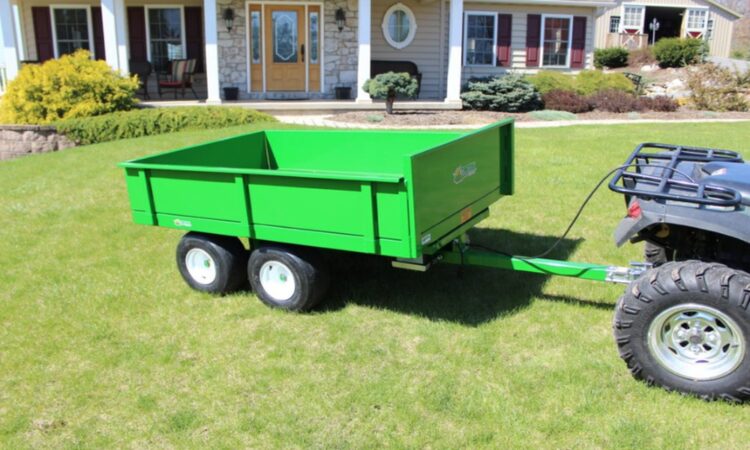
Dump trailers solve a problem that flatbeds and pickup beds can’t: getting heavy material off the trailer without a shovel. The catch is that “dump trailer” covers everything from a 5×8 single-axle hauler that fits behind a half-ton pickup to a 7×16 high-side tandem that needs a serious tow vehicle. Buyers walk onto our lots at Grizzly Trailer Sales in Rupert and Montpelier with the same general idea (they need to haul stuff and dump it) and very different actual jobs in front of them. Sizing the trailer correctly is the difference between a tool that pays for itself and one that’s either too small for the work or too much trailer for the truck.
What Determines the Right Size
Three numbers matter more than any other when sizing a dump trailer:
GVWR, or Gross Vehicle Weight Rating, is the maximum loaded weight of the trailer including its own dead weight. Common dump trailer ratings are 7,000, 10,000, 12,000, 14,000, and 16,000 pounds.
Payload is what’s left for cargo after the empty trailer is subtracted from the GVWR. A 14K dump trailer that weighs 4,400 pounds empty has a 9,600-pound payload. That distinction trips up buyers who think a 14K rating means they can put 14,000 pounds of gravel in the bed.
Cubic yard capacity is the volume of material the bed can physically hold. A standard low-side 6×12 dump trailer holds roughly 3 cubic yards level-full. The weight of that 3 yards depends entirely on what’s in it.
The third number is the one most often overlooked. A trailer rated for 10,000 pounds with a 4-cubic-yard bed can be over its GVWR with less than half its volumetric capacity used.
Material Weights That Determine What You Can Carry
Different materials weigh wildly different amounts per cubic yard:
- Dry topsoil: about 2,000 to 2,400 pounds per cubic yard
- Wet topsoil or fill dirt: 2,400 to 3,000 pounds per cubic yard
- Dry sand: about 2,700 pounds per cubic yard
- Wet sand: up to 3,500 pounds per cubic yard
- Gravel and crushed rock: 2,800 to 3,400 pounds per cubic yard
- Asphalt millings: about 2,000 pounds per cubic yard
- Concrete debris: 4,000 pounds or more per cubic yard
- Wood mulch: 400 to 800 pounds per cubic yard
- Sugar beet tare and other agricultural waste: varies widely with moisture content
A 6×10 low-side dump trailer with a 3.5-yard capacity loaded with wet gravel can easily exceed 10,000 pounds. The same trailer loaded with mulch might weigh 3,000 pounds. The trailer’s GVWR has to match the heaviest realistic load you’ll be hauling, not the average.
Sizing for Common Idaho Use Cases
A few specific user profiles cover most of what walks onto our lots.
The DIY property owner. Someone with a few acres outside Rupert or Burley who needs to haul gravel for a driveway, move firewood, take occasional construction debris to the transfer station, and clean up the property a few times a year. A 5×10 or 6×10 trailer in the 7,000 to 10,000 GVWR range usually fits the work and the tow vehicle. Pulled comfortably by most half-ton and three-quarter-ton pickups with a properly equipped tow package.
The small landscape crew. Daily hauling of mulch, topsoil, sod, and small equipment. The volumetric capacity starts to matter more than maximum weight because mulch and soil rarely max out the GVWR. A 6×12 or 7×14 low-side trailer in the 10,000 to 14,000 GVWR range with a 4 to 5 yard capacity hits the sweet spot. High sides add real value if you haul a lot of mulch or light bulky materials.
The farmer or rancher. Mixed hauling: feed, manure, tare, fence materials, sometimes hay, occasionally equipment. The work tends to favor a 7×14 or 7×16 trailer in the 14,000 GVWR range. Two-way tailgates that swing for unloading bulk material and drop down flat for loading equipment earn their keep here.
The contractor or excavator. Concrete, asphalt millings, demolition debris, fill dirt. These materials are heavy enough that GVWR matters more than volume. A 7×14 in the 14,000 or 16,000 GVWR range is typical, often with reinforced floors and walls. Some operators step up to gooseneck dump trailers when they need capacity beyond what bumper pull frames can handle.
Hydraulic Systems Worth Understanding
Three hydraulic ram configurations are common on bumper-pull dump trailers:
Single ram, sometimes called single piston, is the most common and the least expensive. The ram pushes from the front of the bed. Works well for most general use and dumps to roughly 45 degrees.
Scissor lift uses a hinged arm system that allows higher dump angles, often approaching 60 degrees. Better for sticky materials like wet clay or compacted gravel that need a steeper angle to release.
Telescopic, sometimes called dual or triple-cylinder telescopic, gives the highest dump angles and the cleanest unloads. Premium feature on higher-end trailers and worth considering for buyers who unload heavy, sticky materials regularly.
For most landscape and DIY users, a single ram is more than adequate. Operators who haul wet material in cold weather often appreciate the upgrade to scissors or telescopic.
High Side vs. Low Side
Low side dump trailers have walls 12 to 18 inches tall. High side trailers extend the walls to 24, 36, or even 48 inches with optional side extensions.
High sides multiply usable volume for light materials. A 6×12 low side with 18-inch walls holds about 4 yards. The same trailer with 48-inch sides can hold close to 10 yards of mulch, though weight still has to stay within the GVWR.
Low sides load equipment more easily, work better for short loads of dense material, and offer better visibility while backing. The choice usually comes down to what you actually haul.
Other Features That Matter
A few items worth checking when comparing dump trailers on the lot:
- Spreader-style barn doors versus a single rear gate, depending on whether you spread material as you drive
- Stake pockets on the rails for hauling occasional non-bulk loads
- Tarp kits, either factory-installed or aftermarket, for any material that needs to be covered on the road
- Battery and charger location for the hydraulic pump
- Brake configuration, with brakes required on at least one axle for trailers above the threshold in Idaho Code § 49-927
- D-rings inside the bed for the occasional equipment haul
How Grizzly Trailer Sales Helps Buyers Match Trailer to Job
The conversation that gets buyers to the right dump trailer usually takes 10 minutes. What are you hauling, what’s the heaviest realistic load, what truck is going to pull it, and how often will you use it. From there, the brand and configuration choices fall into place quickly. Our lots carry dump trailers in a range of sizes and capacities from brands like Snake River, Walton, and others suited to Idaho conditions.
Stop by 305 W 100 S in Rupert or 740 N 4th St in Montpelier to look at dump trailers in person, or call Grizzly Trailer Sales at (208) 678-2981 to talk through sizing for your specific work. Picking the right size the first time saves money, fuel, and trips.